Preliminary Results Optimizing L1-Magic (5-80x Speedup)

l1magic_cover_smClick to Download Presentation

L1-Magic is old interior-point library developed by Justin Romberg around 2005.  It solves seven problems related to compressive sensing and the convex relaxation of L0 problems:

  1. Basis Pursuit ( L1 with Equality Constraints, P1):
    \( \min{\lVert x \rVert_1} \text{ subject to } Ax=b \)
  2. Decode (PA):
    \( \min_{x} \lVert y-Ax\rVert _1 \)
  3. L1 w/ Quadratic Constraints (P2):
    \( \min{\lVert x \rVert_1} \text{ subject to } \lVert Ax – b \rVert \leq \epsilon \)
  4. Dantzig Selector (D): 
    \( \min{\lVert x \rVert_1} \text{ subject to } \lVert A^*(Ax – b) \rVert_\infty \leq \gamma \)
  5. Total Variation with Equality Constraints (TV1):
    \( \min{TV(x)} \text{ subject to } Ax=b \)
  6. Total Variation with Quadratic Contraints (Tv2):
    \( \min{TV(x)} \text{ subject to } \lVert Ax – b \rVert \leq \epsilon \)
  7. Dantzig TV (TVD)

In the attached presentation given to the Georgia Tech CSIP Compressed Sensing Group and the So-Called “Children of the Norm”, I show how modifications to a handful of lines of code in L1-Magic can result in

  1. Substantial speed improvement
  2. Increased Stability
  3. Reduced Memory Usage

To do this, I use the following limitations

  1. No new fundamental methods
  2. No MEX Allowed
  3. No GPU or Parallelization

The improvements are made to Basis Pursuit,  L1 with Quadratic Constraints, and TV1 with various degrees of success:

  1. Reducing unnecessary memory allocations using sparse matrix multiplies and Hadamard products (P1)
  2. Exploit Low Rank Structure in matrix A using the Woodbury Identity (P2)
  3. Exploit Block Structure to save on processing and memory usage (Tv1)

One substantial contribution is that the l1qc (P2) code displayed substantial stability issues. For low rank problems, we completely  fix this issue and show ~100x speedup on certain problems.  Results are dependent on the shape of A (low rank gives us better results) and incorporating these results may require switching methods between the current implementation and these proposed changes  as m approaches n.

l1eq_comparison


OpenCL Example: Bandwidth Test

Results

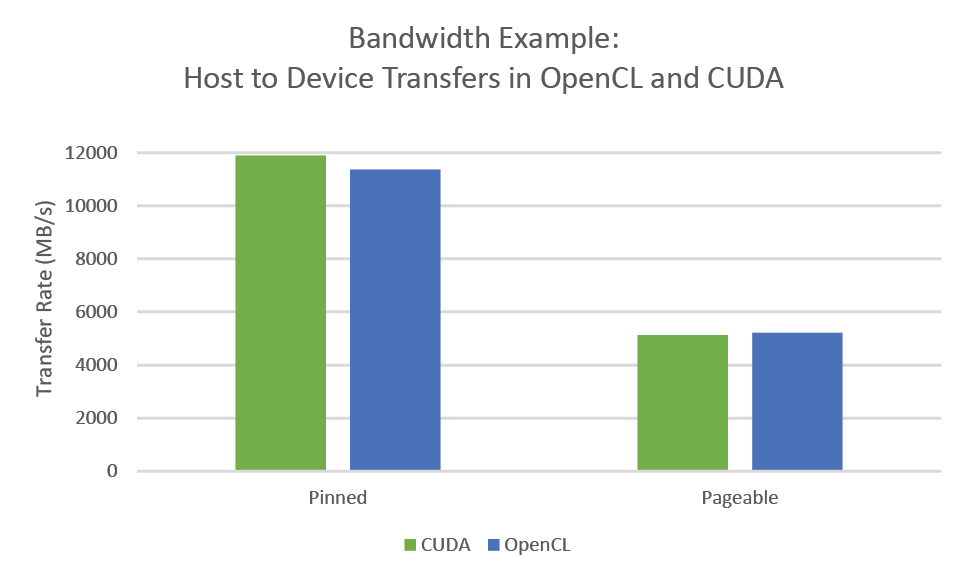
The NVIDIA CUDA Bandwidth example discussed before has an OpenCL equivalent available here (the OpenCL examples had previously been removed from the CUDA SDK, much to some people’s chagrin). A basic comparison was made to the OpenCL Bandwidth test downloaded 12/29/2015 and the CUDA 7.5 Example Bandwidth Test provided in with the CUDA SDK. Interestingly, the OpenCL bandwidth runs in PAGEABLE mode by default while the CUDA example runs in PINNED mode and resulting in an apparent doubling of speed by moving from OpenCL to CUDA. However, the OpenCL bandwidth example also has a PINNED memory mode through the use of mapped buffer transfers and we find that OpenCL and CUDA operate comparably.

cudavopencl

Operation

The OpenCL example runs in either PINNED or PAGEABLE mode, where PAGEABLE corresponds to standard clEnqueueWriteBuffer commands and PINNED mode corresponds to an equivalent and faster clEnqueueMapBuffer and subsequent clEnqueueWriteBuffer  to perform the transfer.

    if(memMode == PINNED)         
    {             
        // Get a mapped pointer         
        h_data = (unsigned char*)clEnqueueMapBuffer(cqCommandQueue, cmPinnedData, CL_TRUE, CL_MAP_READ, 0, memSize, 0, NULL, NULL, &ciErrNum);     
        oclCheckError(ciErrNum, CL_SUCCESS);         
    }         // DIRECT:  API access to device buffer     
    for(unsigned int i = 0; i < MEMCOPY_ITERATIONS; i++)         
    {          
       ciErrNum = clEnqueueWriteBuffer(cqCommandQueue, cmDevData, CL_FALSE, 0, memSize, h_data, 0, NULL, NULL);         
       oclCheckError(ciErrNum, CL_SUCCESS);         
    }         
    ciErrNum = clFinish(cqCommandQueue);
    oclCheckError(ciErrNum, CL_SUCCESS);</pre>
<pre>    //get the the elapsed time in seconds
    elapsedTimeInSec = shrDeltaT(0);
    
    //calculate bandwidth in MB/s
    bandwidthInMBs = ((double)memSize * (double)MEMCOPY_ITERATIONS)/(elapsedTimeInSec * (double)(1 << 20));
    //clean up memory
    if(cmDevData)clReleaseMemObject(cmDevData);
    if(cmPinnedData) 
    {
        clEnqueueUnmapMemObject(cqCommandQueue, cmPinnedData, (void*)h_data, 0, NULL, NULL);
        clReleaseMemObject(cmPinnedData);
    }

OpenCL Example Run

Running on...

GeForce GTX 750

Quick Mode

Host to Device Bandwidth, 1 Device(s), Paged memory, direct access
   Transfer Size (Bytes)        Bandwidth(MB/s)
   33554432                     5125.9

Device to Host Bandwidth, 1 Device(s), Paged memory, direct access
   Transfer Size (Bytes)        Bandwidth(MB/s)
   33554432                     5181.6

Device to Device Bandwidth, 1 Device(s)
   Transfer Size (Bytes)        Bandwidth(MB/s)
   33554432                     64039.2

[oclBandwidthTest.exe] test results...
PASSED

CUDA Example Run

[CUDA Bandwidth Test] - Starting...
Running on...

 Device 0: GeForce GTX 750
 Quick Mode

 Host to Device Bandwidth, 1 Device(s)
 PINNED Memory Transfers
   Transfer Size (Bytes)        Bandwidth(MB/s)
   33554432                     11888.0

 Device to Host Bandwidth, 1 Device(s)
 PINNED Memory Transfers
   Transfer Size (Bytes)        Bandwidth(MB/s)
   33554432                     11948.6

 Device to Device Bandwidth, 1 Device(s)
 PINNED Memory Transfers
   Transfer Size (Bytes)        Bandwidth(MB/s)
   33554432                     68545.4

Result = PASS


Zernike Polynomial

A quick implementation of of Zernike polynomials for modeling wavefront aberrations to to optical turbulence. Equations pulled from  Michael Roggemann’s Imaging Through Turbulence.

Zernike polynomials are often used to model wavefront aberrations for various optics problems. The equations are expressed in polar coordinates, so to calculate the image we first convert a grid into polar coordinates using the relation

\(y = r\times sin(\theta) \)
\(r = \sqrt{x^2 + y^2} \)
\(\theta = tan^{-1}\frac{y}{x}\)

And then calculate the Zernike Polynomials as

\(Z_{i,even}(r,\theta) = \sqrt{n+1}R^m_n(r)cos(m\theta) \)
\(Z_{i,odd}(r,\theta) = \sqrt{n+1}R^m_n(r)sin(m\theta) \)
and \(Z_{i}(r,\theta) =R^0_n(r)\) if \(m=0\)

Where the functions \(R^m_n(r)\) are called Radial Functions are are calculated as

\(R^m_n(r) =\sum_{s=0}^{(n-m)/2} \frac{(-1)^s(n-s)!}{s![(n+m)/2 – s]![(n-m)/2 – s]!} r^{n-2s} \)

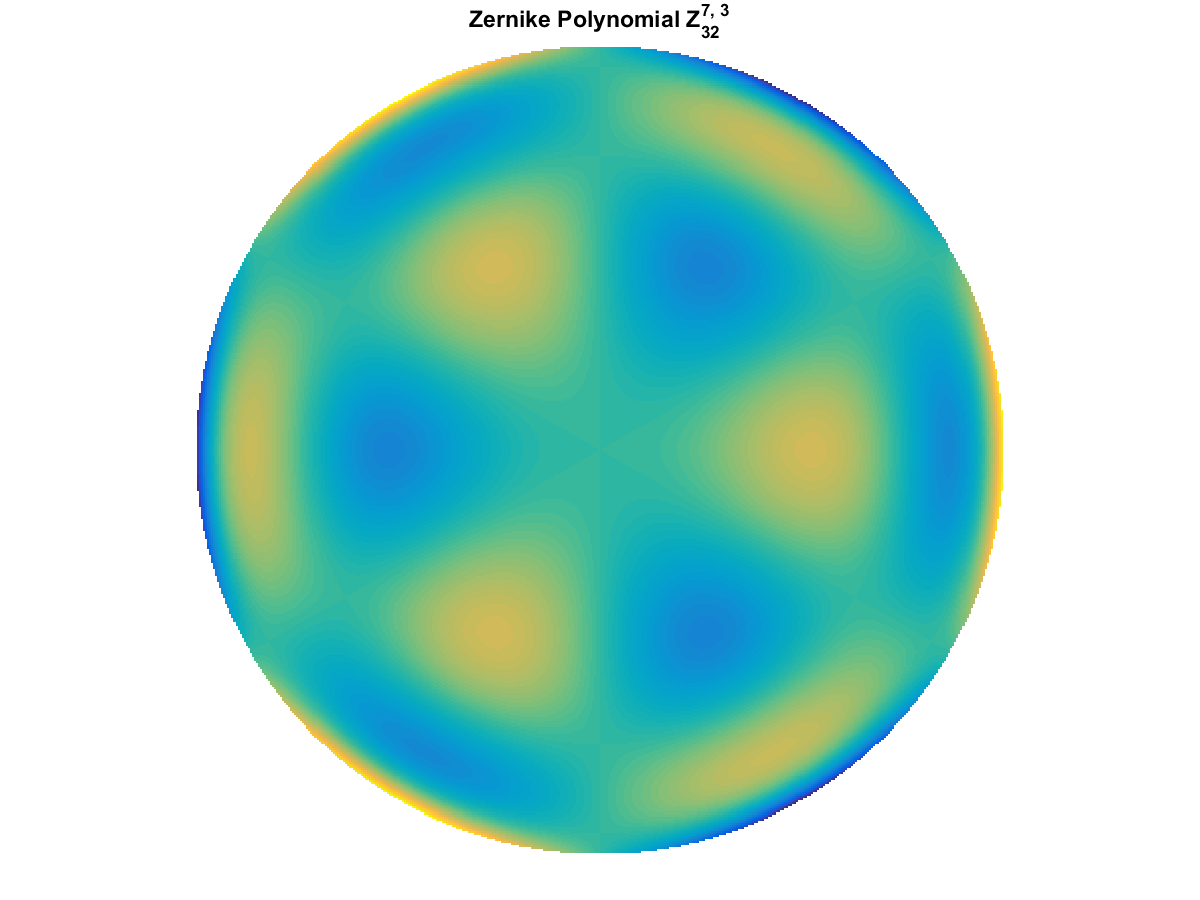
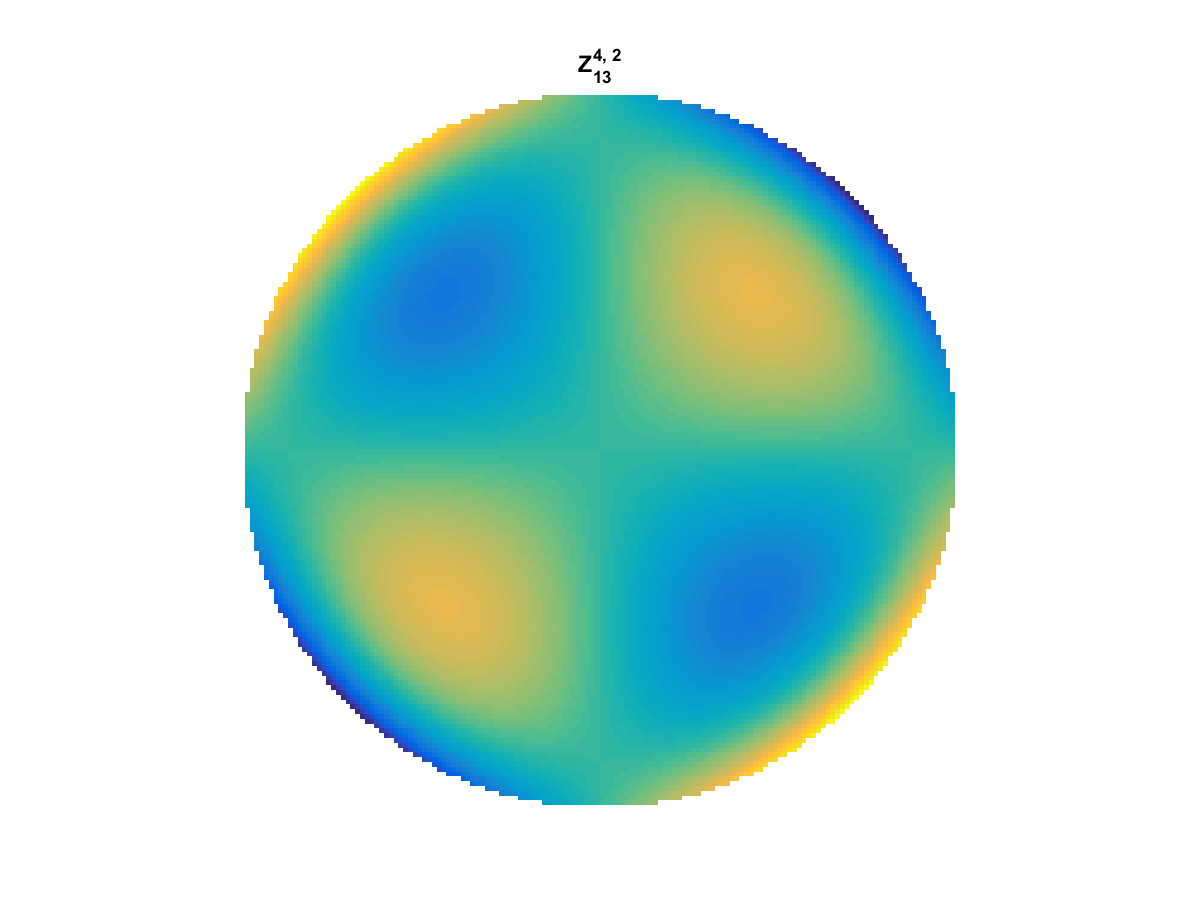
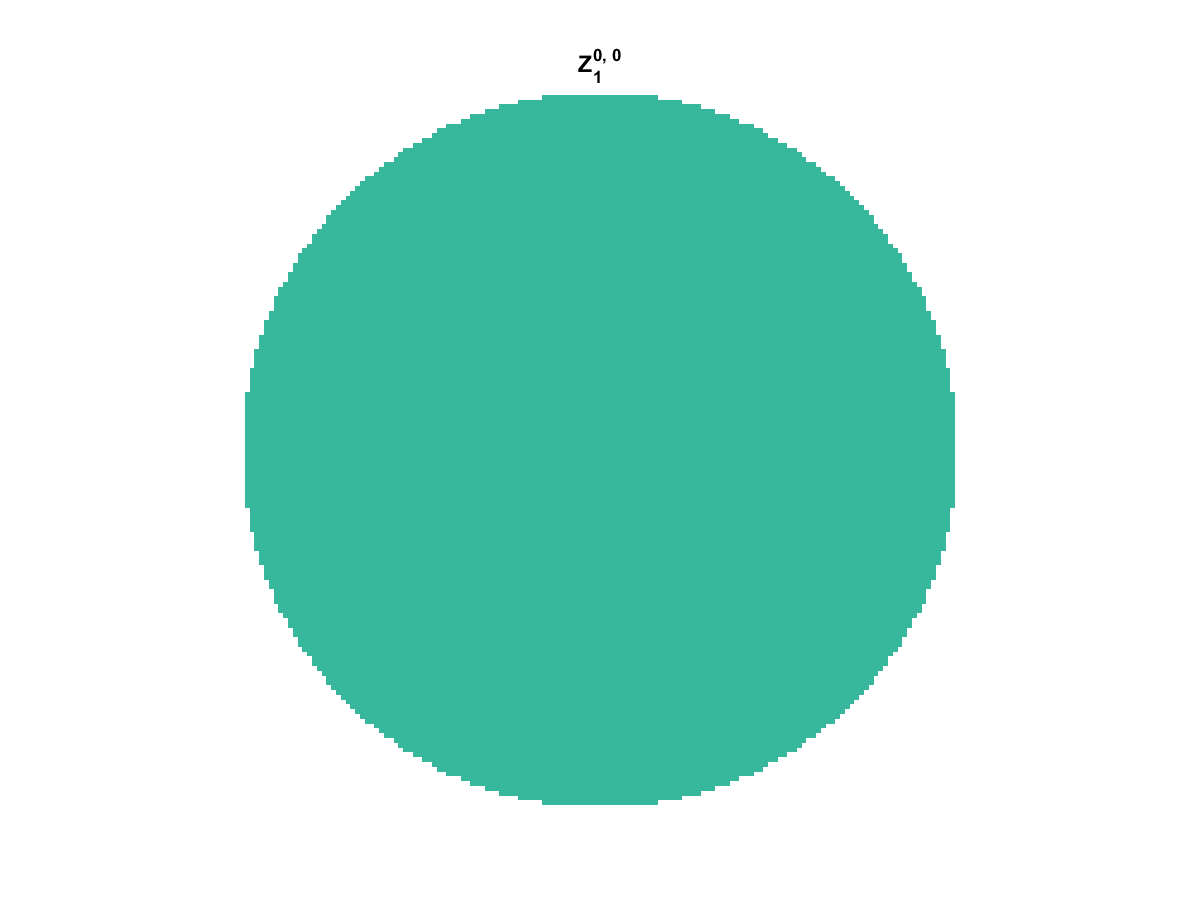
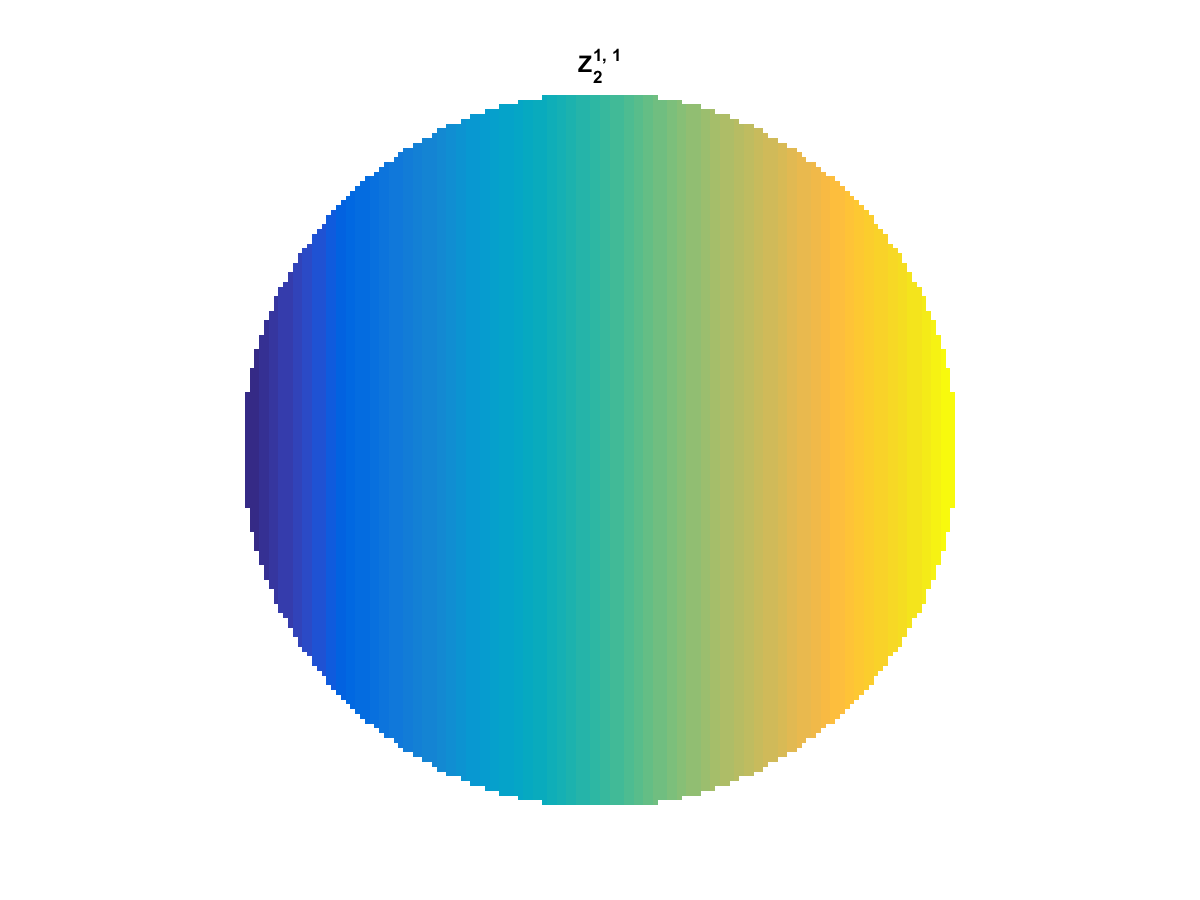
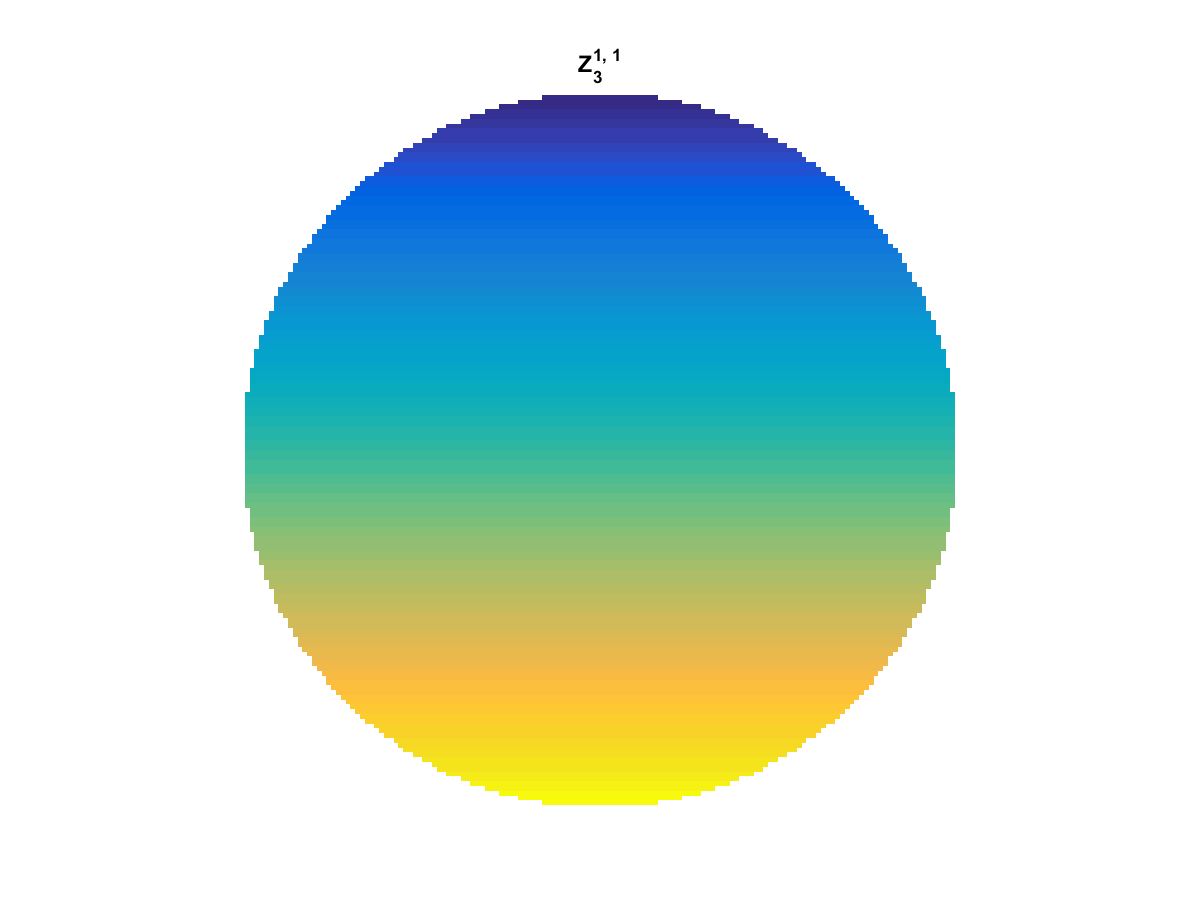
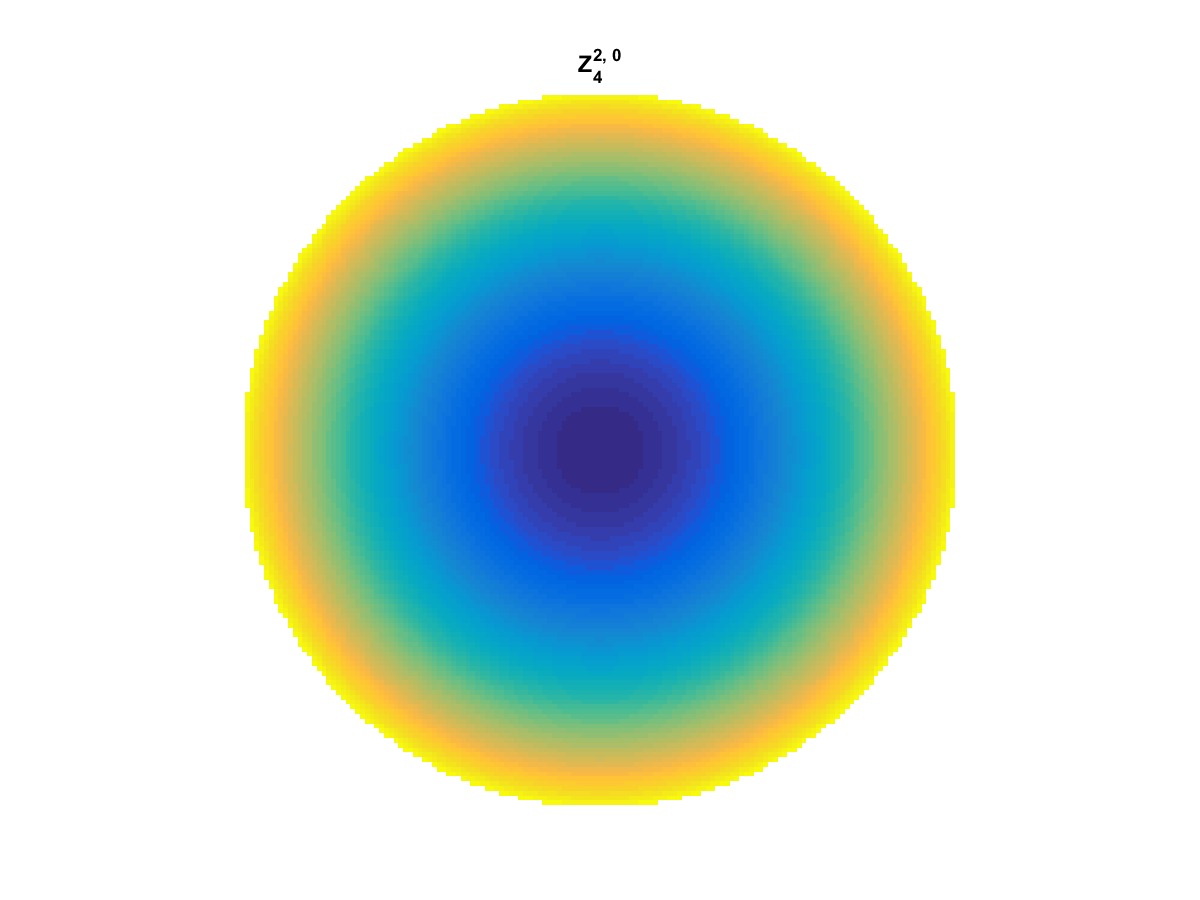
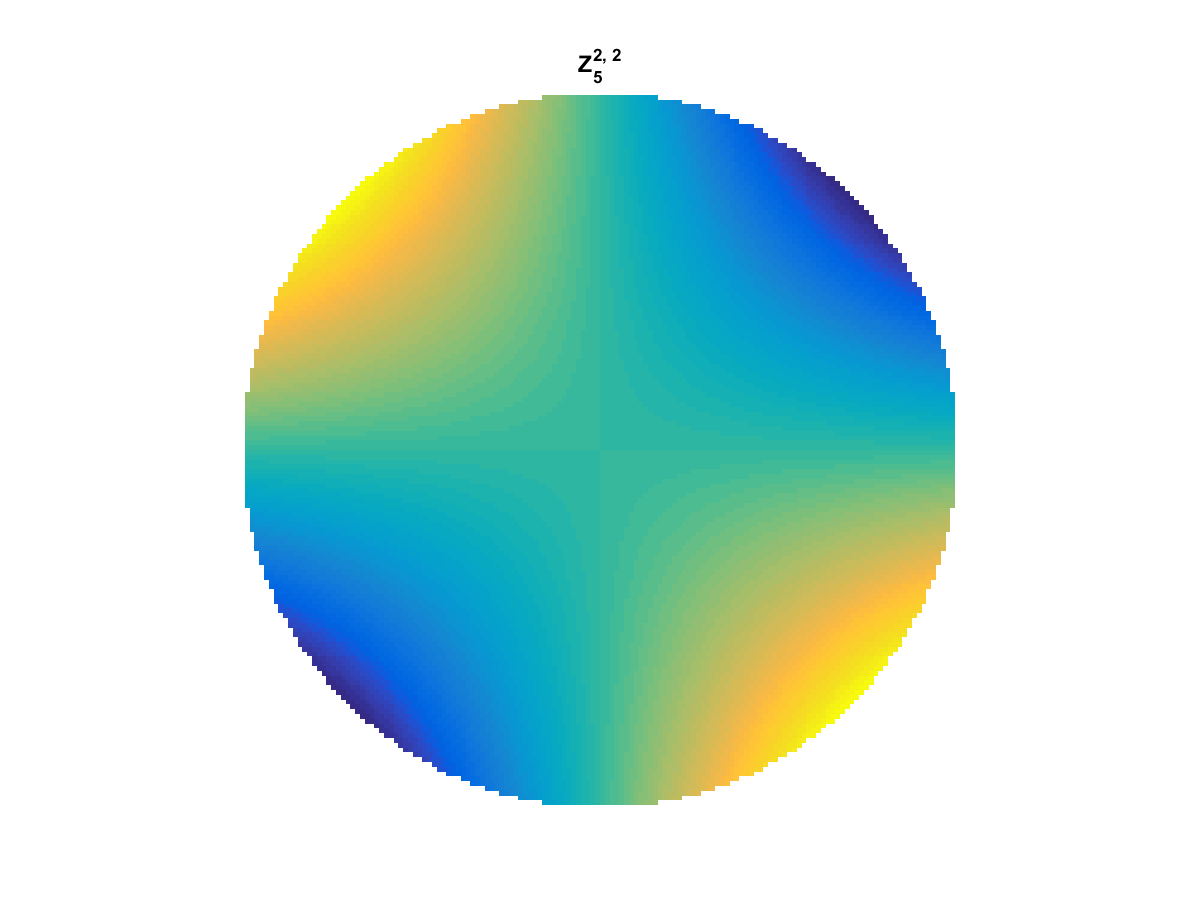
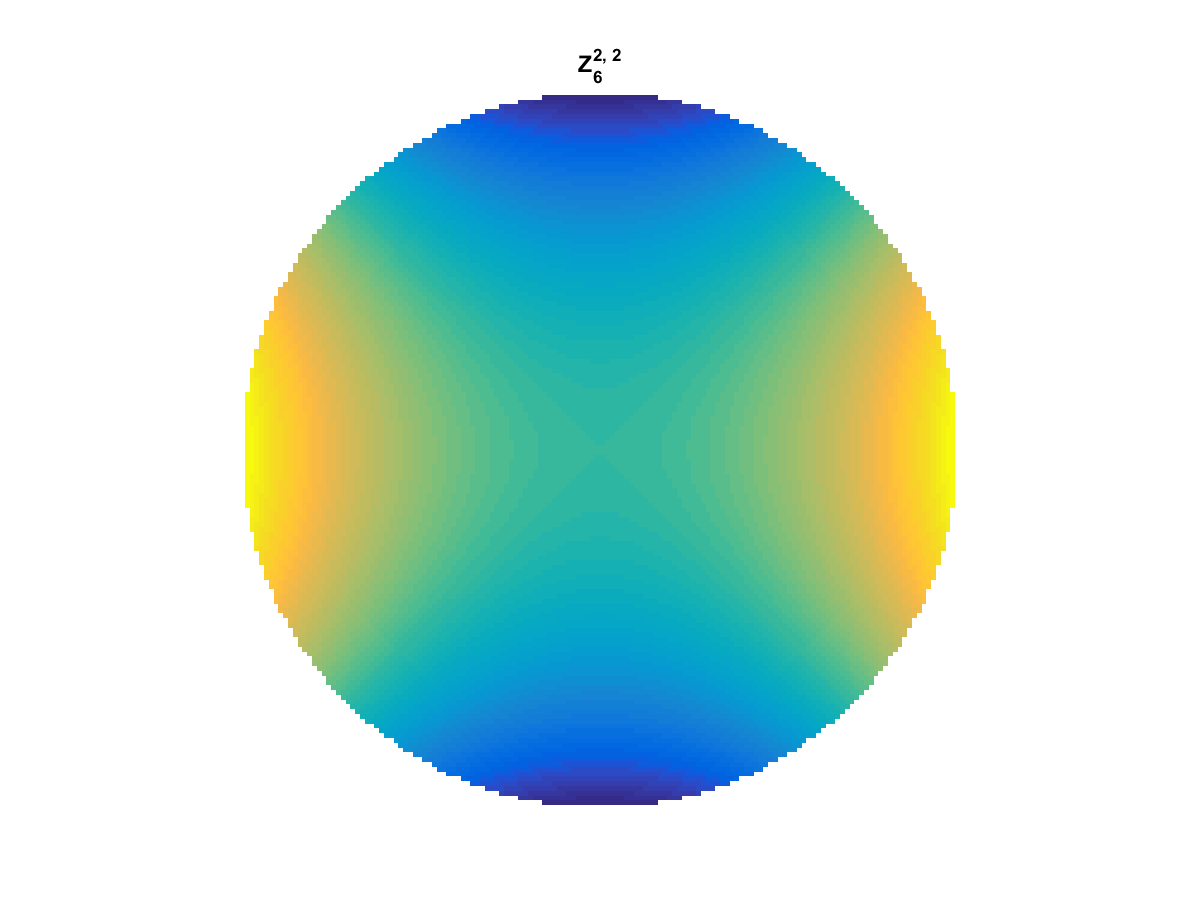
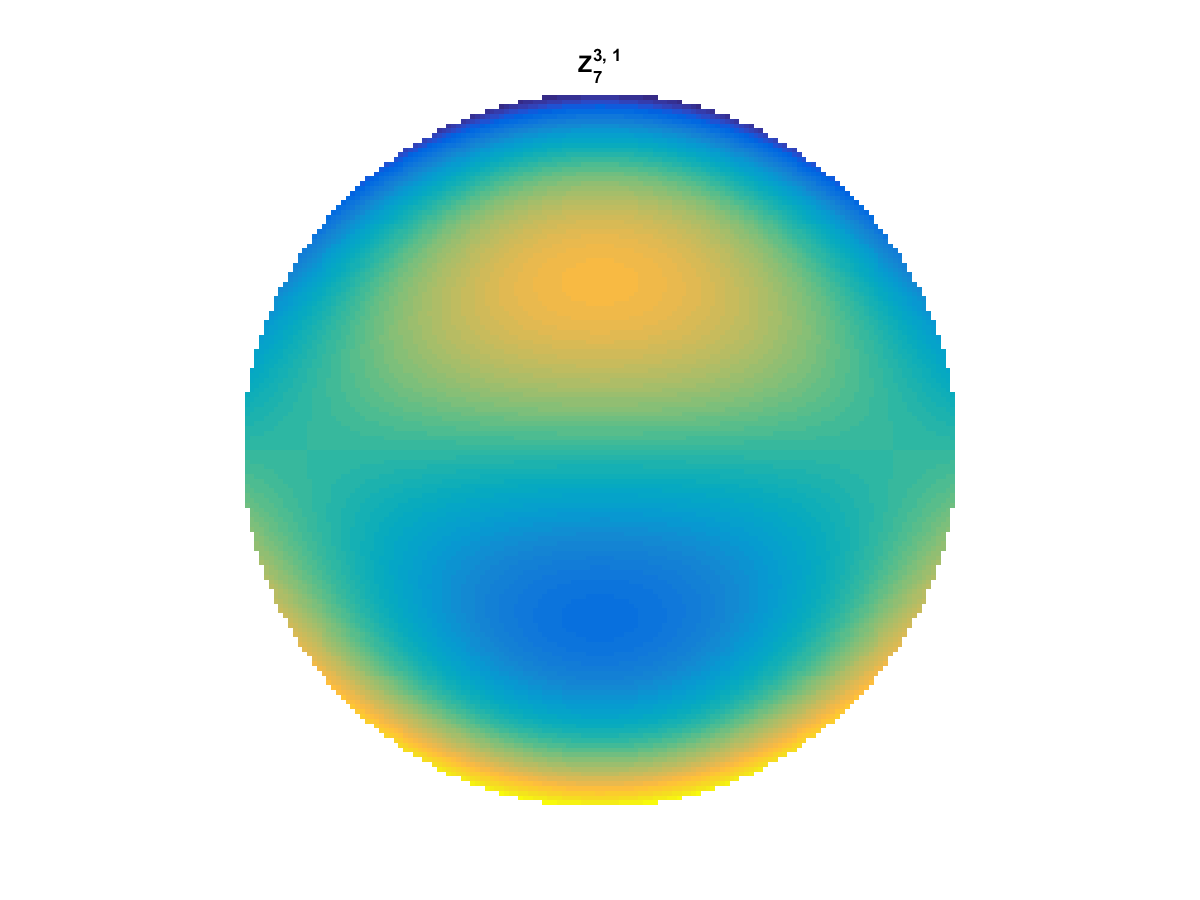
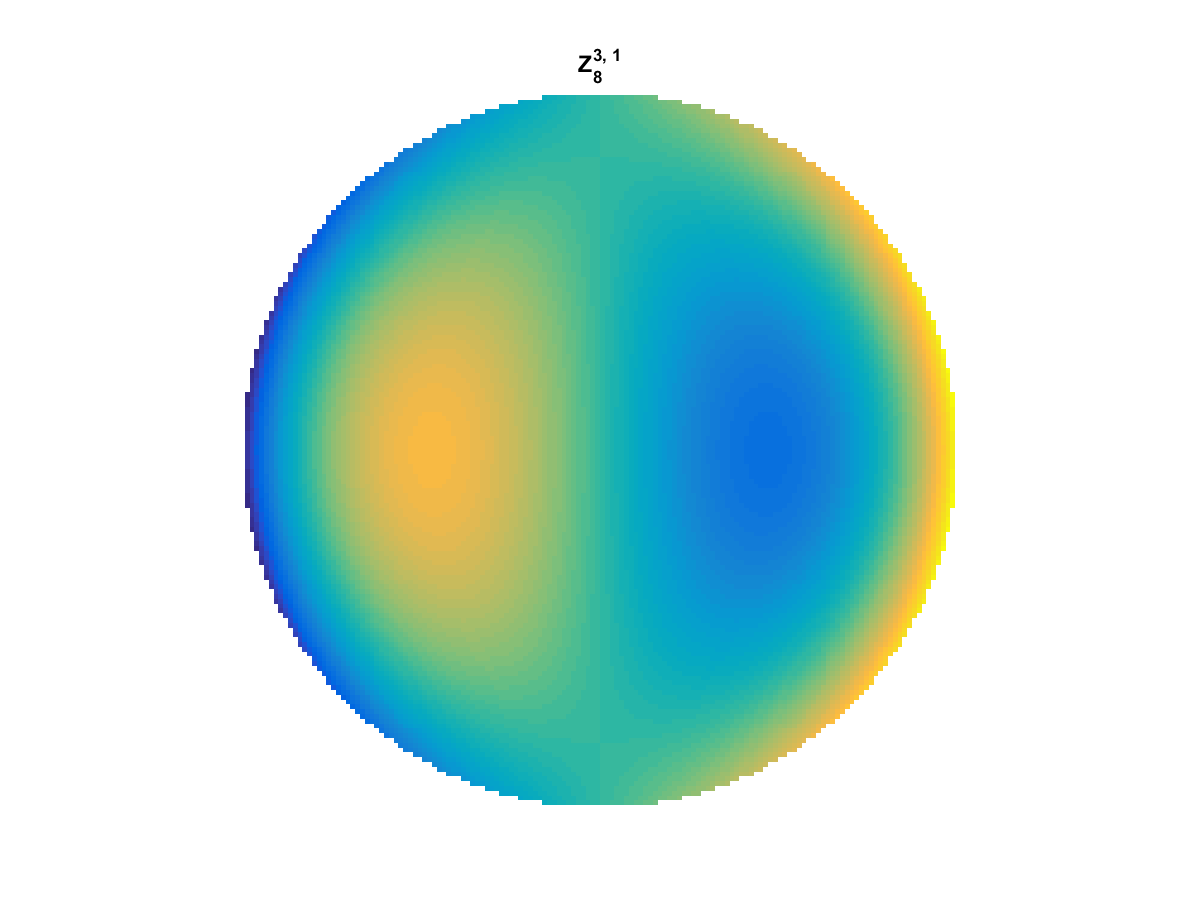
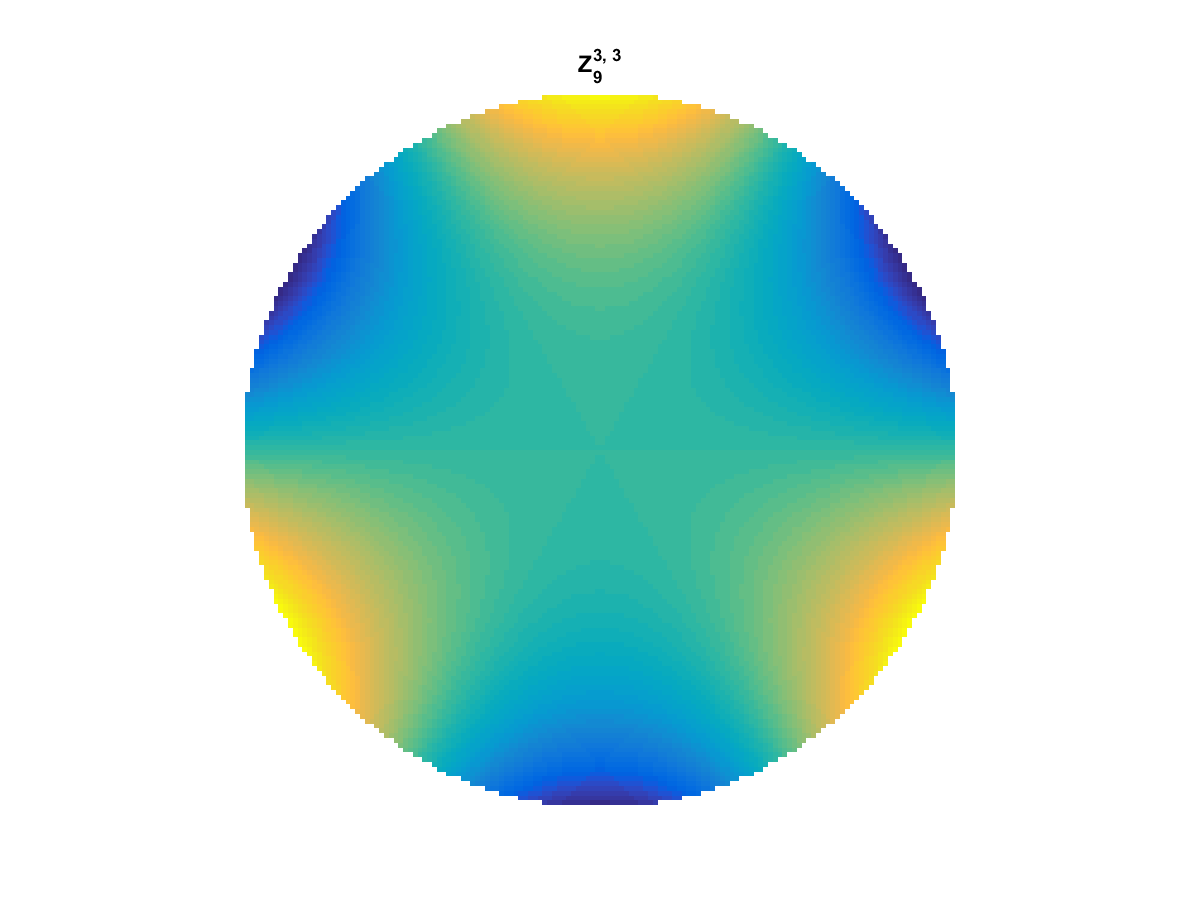
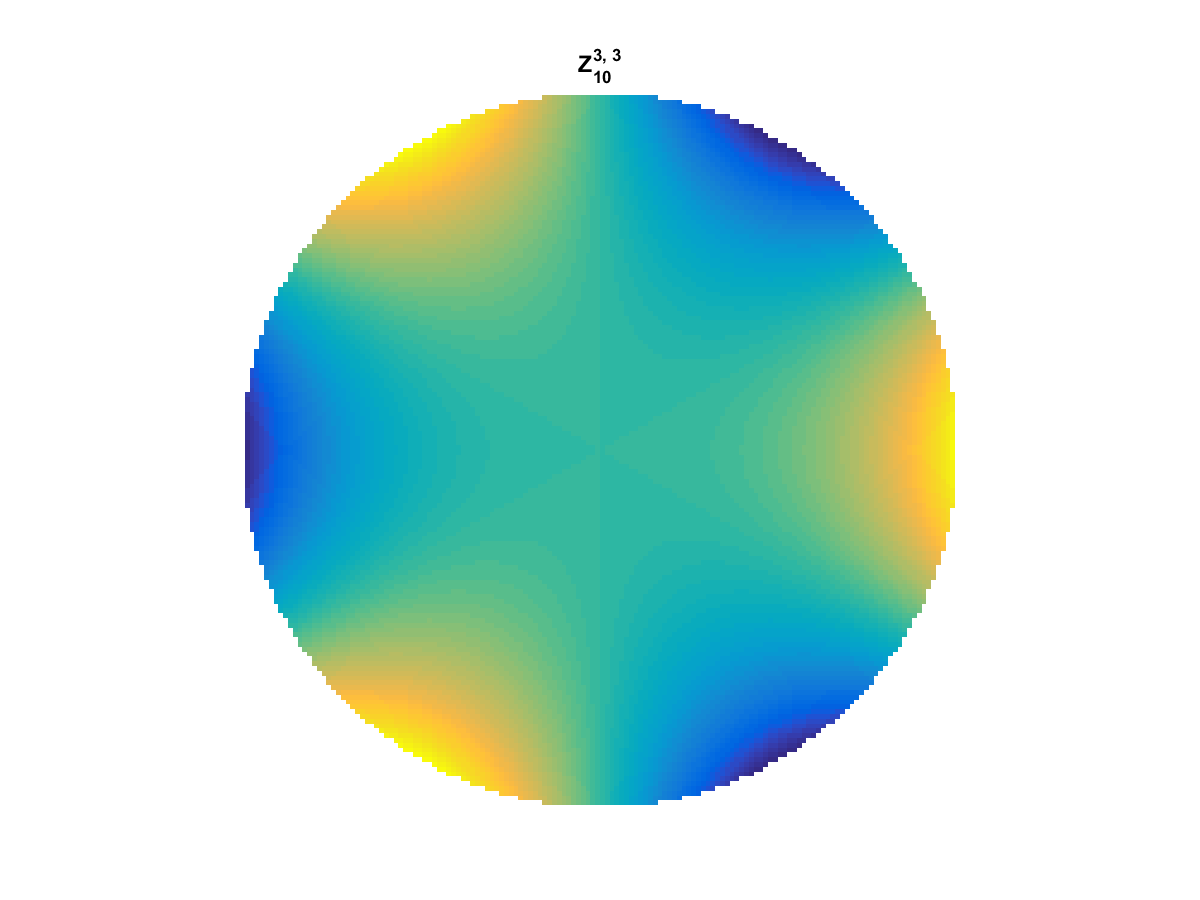
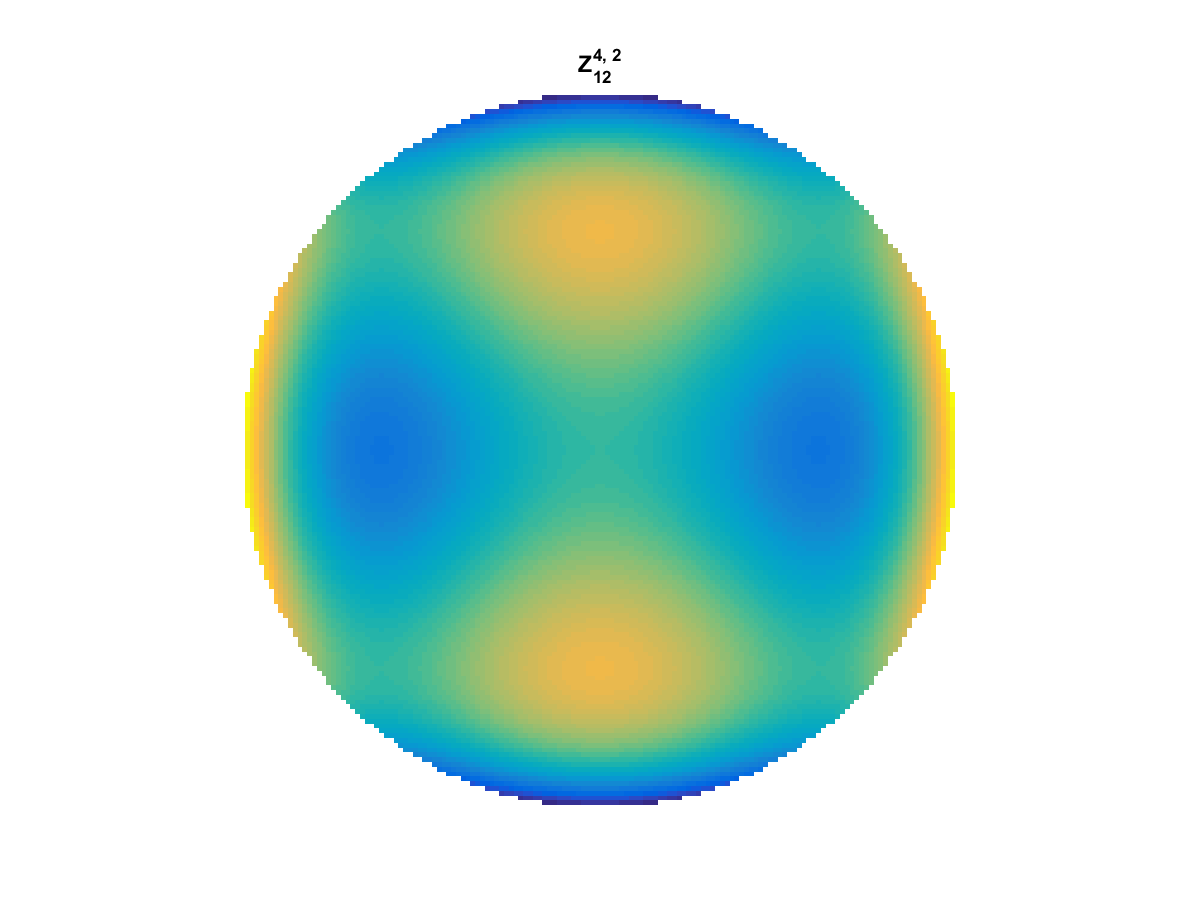
With Noll normalization. Certain polynomials have names. First is \(Z_1\), know as Piston as is often subtracted to study of single aperture systems. Next, \(Z_2\) and \(Z_3\) are ramps that are called tilt and cause displacement. \(Z_4\) is a centered ring structure known as defocus while \(Z_5\) and \(Z_6\) are astigmatism, \(Z_7\) and \(Z_8\) are coma, and \(Z_{11}\) is spherical aberration.

They can be imaged as follows:

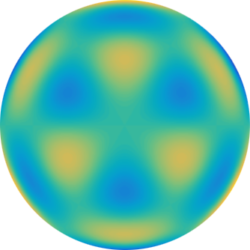
Zernike Polynomial Z_13_4_2 Zernike Polynomial Z_1_0_0 Zernike Polynomial Z_2_1_1 Zernike Polynomial Z_3_1_1 Zernike Polynomial Z_4_2_0 Zernike Polynomial Z_5_2_2 Zernike Polynomial Z_6_2_2 Zernike Polynomial Z_7_3_1 Zernike Polynomial Z_8_3_1 Zernike Polynomial Z_9_3_3 Zernike Polynomial Z_10_3_3 Zernike Polynomial Z_11_4_0 Zernike Polynomial Z_12_4_2

All created using the following code:


function result = z_cart(i,m,n, x,y)
%Z_POL result the zernike polynomial specified in cartesian coordinates

% calculate the polar coords of each point and use z_pol:
r = (x.^2 + y.^2).^(1/2);
thta = atan2(y,x);

result = z_pol(i,m,n,r,thta);

end

function result = z_pol(i, m,n, r,t)
%Z_POL result the zernike polynomial specified in polar coordinates

if(m==0)
    result = radial_fun(0,n,r);
else
    if mod(i,2) == 0 % is even
        term2 = cos(m*t);
    else
        term2 = sin(m*t);
    end
    
    result = sqrt(n+1)*radial_fun(m,n,r).*term2;
end

end

function result = radial_fun(m,n,r)
%RADIAL_FUN calculate the radial function values for m,n, and r specified
result = 0;

for s = 0:(n-m)/2
    result = result + (-1)^s *factorial(n-s)/ ...
        (factorial(s)*factorial((n+m)/2 -s)*factorial((n-m)/2-s)) *...
        r.^(n-2*s);
end
end

Matlab R2014b CPU and GPU Matrix Multiply Time Comparison

Matlab has incorporated GPU processing on the parallel computing toolbox and you can create GPU array objects using the gpuArray(…) function in MATLAB. I created a brief script to compare  matrix multiply of a 2048 x 2048 matrix against a vector. Ordinarily, the CPU operations see reasonable speedup (~2x) from moving from double to single precision values. However, moving to the GPU implementation results in a speedup of  6.8x for Double and  5.6x for Single! This means that if you can take a matrix-vector multiply that is double precision and convert it to single precision GPU version, you may see  a gain of nearly 14x.

The following we generated in Matlab R2014b on an i7-4770 3.5 Ghz CPU  (8 CPUs) with 16GB Ram and a Geforce GTX 750.

CPUGPUTimingMatlab2014bGPUSpeedupThe next step is to evaluate speed of the gpuArray on a basic L1 Optimization set—l1 magic.

The code used to generate this data is as follows:


allTypes = {'Double', 'gpuArrayDouble', 'Single', 'gpuArraySingle'};
allTimes = nan(length(allTypes),1);

n = 2048;       % size of operation for Ax
num_mc = 2^10;  % number monte carlo runs to compute time average of runs

randn('seed', 1982);
Am = randn(n,n);
xm = randn(n,1);      

for ind_type = 1:length(allTypes)
   
    myType = allTypes{ind_type};
     
    switch lower(myType)
        case 'double'
            A = double(Am);
            x = double(xm);
        case 'single'
            A = single(Am);
            x = single(xm);
        case 'gpuarraydouble'
            A = gpuArray(Am);
            x = gpuArray(xm);
        case 'gpuarraysingle'
            A = gpuArray(single(Am));
            x = gpuArray(single(xm));
        otherwise
            error('Unknown type');            
    end    
    
    tic
    for ind_mc = 1:num_mc
        y = A*x;
    end
    allTimes(ind_type) =  toc/num_mc;
    
end

%% Display the results
figure(34);
clf;
bar(allTimes*1000);
set(gca, 'xticklabel', allTypes, 'color', [1 1 1]*.97);
title(['Timing of CPU and GPU in M' version('-release')]);
xlabel('Type');
ylabel('Time (ms)');
grid on

%%
figure(35);
clf;
speedupLabels = {('Double to Single') , ...
                 ('Double to gpuDouble'), ...
                 ('Single to gpuSingle'), ...
                 'Double to gpuSingle'};
bar([allTimes(1)/allTimes(3), allTimes(1)/allTimes(2),  ...
    allTimes(3)/allTimes(4), allTimes(1)/allTimes(4)]);
set(gca, 'xticklabelrotation', 15, 'xticklabel', speedupLabels, 'color', [1 1 1]*.97);
title(['Speedup of CPU and GPU in M' version('-release')]);
xlabel('Type');
ylabel('Speedup');
grid on

HTML Viewer in PHP

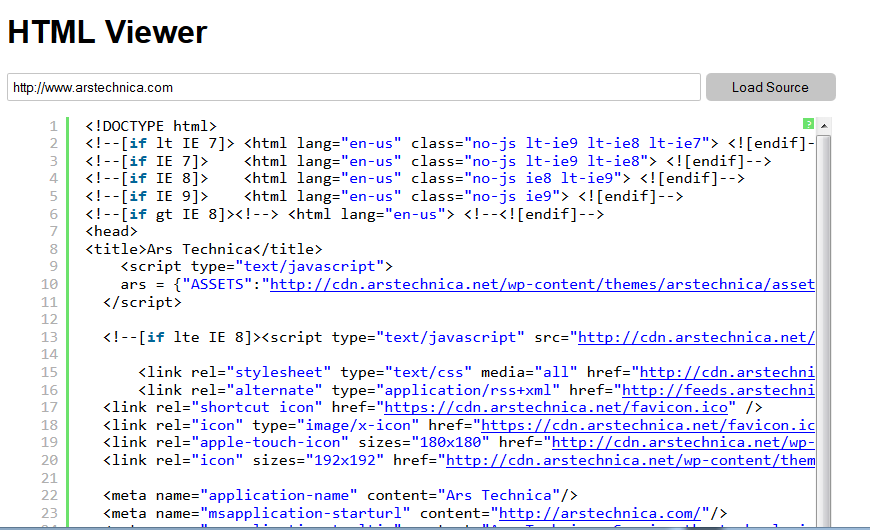
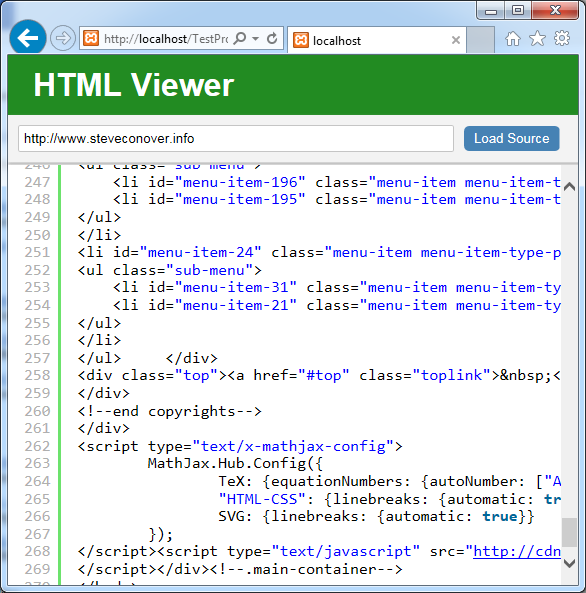
Created an HTML Source Viewer on my local server. Since the standard technique for Javascript cross site requests is now verboten, I created a PHP script that pulls the site and displays the HTML:

  1. PHP
  2. Post back with cross site scripting and HTML injection protection
  3. HTML highlighting with SyntaxHighlighter 3.x


HTMLViewDemo2

HTMLViewDemo